Share Ralph Emerson Roughton Jr.'s obituary with others.
Invite friends and family to read the obituary and add memories.
Stay updated
We'll notify you when service details or new memories are added.
You're now following this obituary
We'll email you when there are updates.
Select your format and elements to print

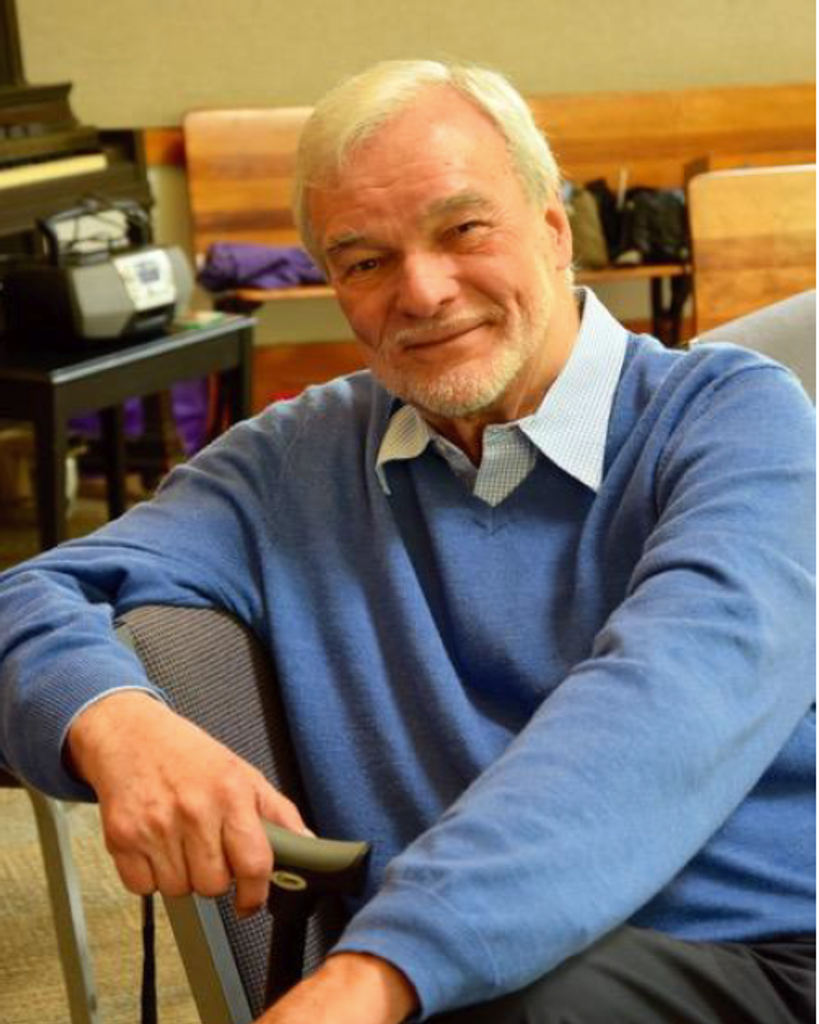


Ralph Emerson Roughton Jr.
Dec 13, 1932 — Jun 17, 2026
Ralph Emerson Roughton, Jr. was born on December 13, 1932 in Sandersville, GA, to Ralph Emerson Roughton, Sr. and Sarah Rogers Roughton, and died peacefully at Emory St. Joseph's Hospital on June 17, 2026. While he experienced numerous effects of aging, he was still very much the man we knew and loved up until his death. He was a generous and caring father, grandfather, husband, brother, and uncle. He was preceded in death by his parents and his only sibling, Sarah Roughton Wilson with whom he thoroughly enjoyed spending time in their later years. He is survived by daughters Joanna Roughton Reed (spouse, Alan) and Barbara Roughton (partner, Blake Brewster), his grandchildren David Reed (spouse, Catherine), Adam Reed, and Emerson Reed. He is also survived by numerous nieces, nephews and cousins.
Dad loved his family dearly. Married to Jane Davis Holmes (née Sarah Jane Holmes) from 1954 until their divorce in 1998, Dad was very devoted to his family and willingly made extensive sacrifices to provide for us. Among those sacrifices was a part of himself. While it was heartbreaking to all of us to have our family dismantled at the time of their divorce, we admired Dad's courage and his commitment to himself as a gay man and to other members of the LGBTQIA+ community. We loved him just the same as always but we had a newfound awareness of the depths of his long term sacrifices and the costs to him personally along with appreciating his part in furthering the understanding and acceptance of homosexuality in his profession as well as in our culture. Through all the transitions of that time, our dad never wavered in his capacity as a warm, compassionate, caring person who wanted to help others.
Early in his career, he made the switch from intending to open a private practice in general medicine to becoming first a psychiatrist and then a psychoanalyst due in part to seeing the impact that could be made to a person's suffering as illustrated in the movie "The Snake Pit". (Dad's colleague and friend, Dr. Susan Vaughan has written in comprehensive detail about his professional career, leadership, and accomplishments which we share below with enormous gratitude to Susan.) The caring that Dad offered to others extended to all his relationships whether it was family, friends, colleagues, or his care givers in assisted living. He was a generous listener exuding acceptance with his calm and gentle manner. And he was always up for a good laugh.
In terms of personal interests, first and foremost was playing the piano for his own pleasure and as an accompanist to others (Joanna included); creating music alone and with others was a high priority in his life. Many varied genres of music were appealing to him whether experienced through attending concerts, listening to recordings, or performing as a member of the Atlanta Symphony Chorus. Other equally enduring pursuits and interests consisted of hiking, reading and discussing literature, working the Sunday NYT crossword puzzle (and subsequently the Wordle word game), watching fine dramatic cinematic performances, having spirited political conversations, and spending time in the solitude of a serenely decorated home.
He will be greatly missed. And his loving influence lives on.
If you feel so inspired, we invite you to share memories of Dad here. His wish was to be cremated and we will be having a memorial service on July 18th, 2026, at 4pm at the Friends Meetinghouse for his family, close friends, and colleagues. Due to immune issues for some family members, we request that you either test negative for COVID the day of the memorial or wear an N-95 mask to the service and reception following (extra masks will be available if needed). To help us in planning, we ask that you RSVP to Joanna at joannaroughtonreed@gmail.com by July 15th if you plan to attend; more details will be provided in response. In lieu of flowers, charitable contributions made in memory of Dad are suggested - these are two that were important to him: Lost-N-Found Youth (lnfy.org) or one of the public broadcasting stations (PBA, PBS, WABE, GPB). We would love to acknowledge any contribution made; please let us know at this address - Barbara Roughton and Joanna Reed, P.O. Box 324, Avondale Estates, GA 30002. If you have any questions or concerns, please don't hesitate to reach out.
In Memory of Ralph E. Roughton, M.D.
a tribute written by Dr. Susan Vaughan
1932 – 2026
Ralph E. Roughton, MD is a man who spent the first half of his life keeping a dark personal secret and the second half teaching our entire field the painful costs of such secrecy and how honesty and authenticity could heal. He was one of the kindest and most thoughtful people I have ever known, and by any measure one of the most quietly consequential psychoanalysts of his generation.
Ralph was a Southerner through and through, born and raised in Georgia. He earned his bachelor's degree from Duke University in 1953 and his medical degree from Duke School of Medicine in 1957. He interned and completed a year of general practice residency at Grady Memorial Hospital in Atlanta, then served in the United States Air Force as chief of the Air Base Outpatient Clinic in Yokota, Japan, from 1959 to 1962. He returned stateside for his psychiatric residency at Emory School of Medicine from 1962 to 1965, where he would remain Clinical Professor in the Department of Psychiatry and Behavioral Sciences for the rest of his career. He completed his psychoanalytic training in 1972 at the Emory University Division of the Columbia University Center for Psychoanalytic Training and Research, was certified in adult analysis by the Board of Professional Standards in 1975 and was appointed Training and Supervising Analyst by Columbia in 1979. He was instrumental in establishing a new, independent psychoanalytic institute at Emory, serving as its Education Director from 1983 to 1986 and then as its Director through the crucial developmental years of 1986 to 1991.
Ralph was an active and vibrant presence within the American Psychoanalytic Association from 1976 onward - eleven years on the Executive Council, five years as a Fellow of the Board of Professional Standards, and service on innumerable task forces, committees, panels, and discussion groups, including a term from 1996 to 1999 as a Representative to the House of Delegates of the International Psychoanalytic Association. His scholarship was prodigious: he authored articles, book chapters, and reviews, served on the editorial boards of Psychoanalytic Terms and Concepts and of Psychoanalysis: The Major Concepts, and reviewed for The International Journal of Psychoanalysis and Yale University Press. Two of his papers - "Useful Aspects of Acting Out: Repetition, Enactment, and Actualization" (1993) and "Repetition and Interaction in the Analytic Process: Enactment, Acting Out, and Collusion" (1994) - became standard texts still assigned in institute curricula today.
His curiosity ran beyond the consulting room. He pursued graduate studies in English literature at Georgia State University, studied Shakespeare's tragedies at Oxford, and brought his two disciplines together in papers on Hawthorne, reading The Scarlet Letter as a kind of psychoanalysis in its own right. It was characteristic of him - a mind that moved easily between rigor and imagination, between the clinical and the human.
But it is the second half of Ralph's story - what he himself called "becoming gay" - for which he will be most remembered. When he entered psychoanalytic training in the 1960s, the field was, in his words, hostilely homophobic; it was simply not possible to be openly gay and train as a psychoanalyst. So Ralph first became an analyst, and only much later became gay - not in the sense of his feelings, which had been there all along, but in the sense of an openly avowed identity. He married, fathered two children, built a respected career, and carried his deepest truth in silence, even, he later believed, into his own training analysis.
Everything changed for him when the American Psychoanalytic Association adopted a nondiscrimination statement regarding homosexuality in 1991. In 1992, President Bernie Pacella and Marvin Margolis, chairman of the Board of Professional Standards, asked Ralph - still himself in the closet - to chair the new Joint Board and Council Committee on Issues of Homosexuality, with the charge of ending discrimination against lesbian and gay candidates and analysts at every level of the organization. For six years he led that committee with what one colleague described as "ferocious grace": an interpersonal Southern gentility paired with an unswerving refusal to let discrimination, inside the organization or out, go unchallenged. Ralph understood early that changing hearts at the national level was not enough - the work had to reach the institutes themselves. Between 1997 and 1998, as the Association's official consultant, he traveled to affiliated institutes across the country - San Francisco, Cleveland, Boston, Washington, Topeka, Michigan, Denver, Pittsburgh, Seattle, St. Louis, Wisconsin, and many more - helping each one recruit and integrate gay and lesbian candidates and revise curricula that had not changed in decades. The committee's most visible achievement was the Public Forum on Homophobia in December 1998.
And in the midst of changing his profession, he changed himself. In 1996, ahead of his own interview for reappointment as a training analyst at Emory, Ralph wrote to the chair of the Training Analysts Committee to say that he intended to discuss, openly, the question of his own sexual orientation. "I am ready," he wrote, "for the walls of secrecy and isolation to come down, for my own benefit." He went on to tell friends and colleagues across the analytic community, in letters of his own writing, that he was a gay man. The response overwhelmed him with its warmth. One colleague, Marvin Margolis, wrote back words Ralph would carry with him and quote often afterward: that the disclosure would not change how people felt about him - it would change how they thought about homosexuality itself.
Introducing him at his 2001 plenary address to the American Psychoanalytic Association, his friend and committee colleague Sidney Phillips reached for Wendell Berry's poem "To Know the Dark" - because Ralph, unlike most analysts, had no unbiased fellow traveler to help him discover himself. He had to go into the dark alone, and find his own way out of it, before he could help guide an entire profession toward the light.
Those who worked beside him remember the person as much as the historic role he played. As a young resident navigating a hurtful and intrusive interview during my own analytic application - one that left me so shaken I walked three miles home in the rain without remembering the journey - Ralph offered not a lecture but a quiet, steady presence: soft eyes, a caring demeanor, and a hug when a hug was what was needed, understood as more powerful than any words. Together with Paul Lynch, myself, and the other first generation of openly gay and lesbian candidates and analysts, he built something rarer than policy change: real fellowship - dinners after long, difficult meetings, solidarity in rooms that did not always welcome them, and the particular joy of being part of a committee that was, visibly and durably, changing the world around it.
Colleagues who traveled with him to more than thirty analytic institutes over the years remember the camaraderie as much as the cause - long weekends on the road, shared meals and museums, and Ralph speaking with quiet pride of his children and, later, his grandchildren. I believe that we, as fellow Southerners, found in this work the particular satisfaction of being part of a civil rights movement that needed to happen, and that Roughton was glad, finally, to help lead us all into the open. He believed deeply that only authenticity and being one's genuine self could lead us out of a shadowy period of prejudice and into an era that holds, far more fully than the one he entered, mutual respect and regard for all its members. He did this not by demanding the field change before he would, but by changing himself in full view of it - and trusting that others would follow. Many did.
He leaves an enormous gap in our community. He also leaves, in everyone he mentored, defended, and loved, something that does not go away. On the one hand, I will forever miss him. On the other, he is already in me, and with me, forever.
Guestbook
Visits: 310
This site is protected by reCAPTCHA and the
Google Privacy Policy and Terms of Service apply.
Service map data © OpenStreetMap contributors